Detailing a Job Description: Why It Matters and How to Do It Effectively

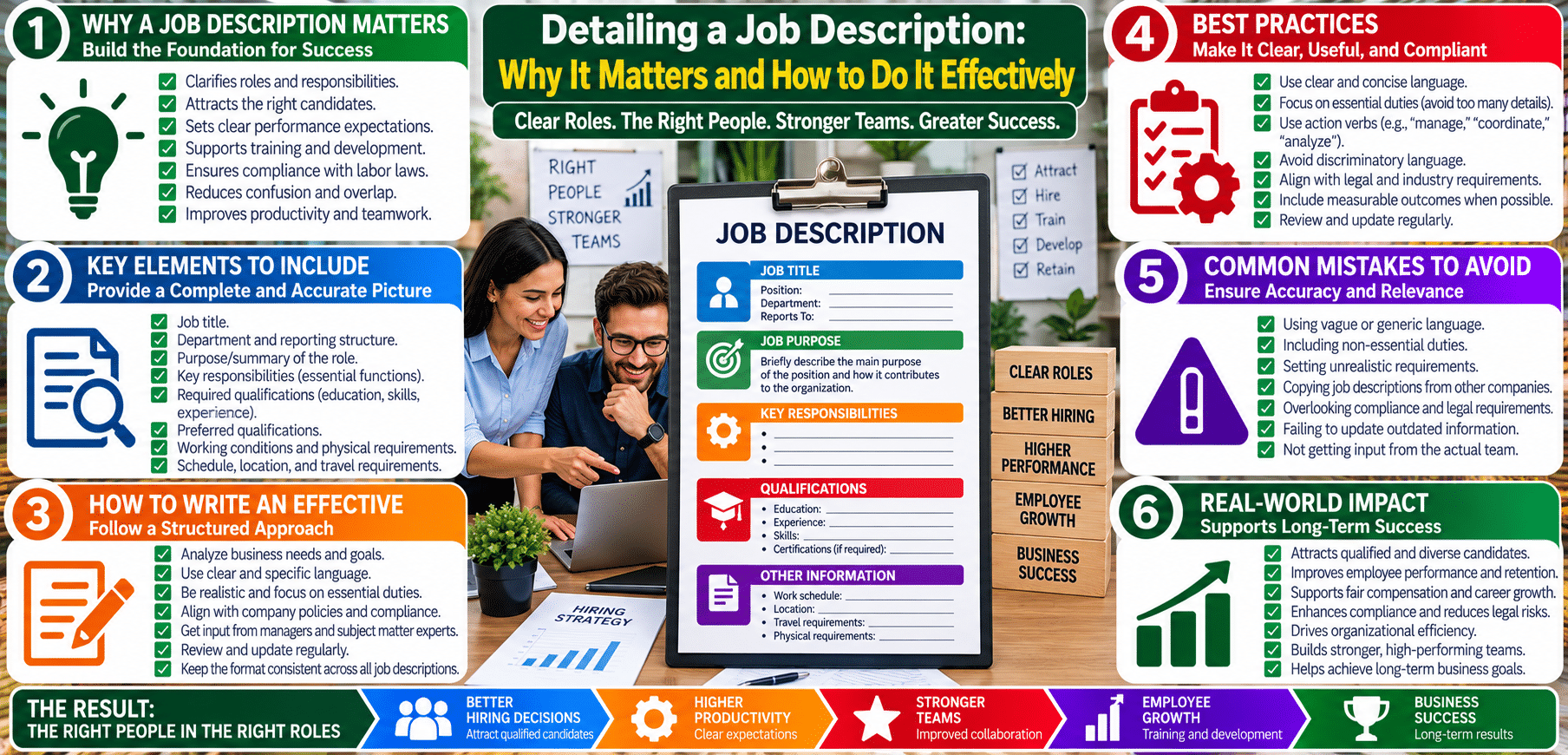

A job description is more than just a formality—it’s one of the most important documents in any workplace. It provides the foundation for recruiting, training, performance management, compliance, and organizational growth. When written well, a job description communicates clear expectations to prospective hires while aligning current employees with the company’s mission, values, and performance standards.
1. Clear Expectations
A detailed job description outlines duties, responsibilities, and performance standards. Employees know exactly what is required of them, reducing confusion and increasing accountability.
2. Recruitment and Hiring
Well-written job descriptions attract qualified candidates by presenting an accurate picture of the role. They also keep recruiters and hiring managers aligned on the essential skills and qualifications.
3. Legal Protection
Documenting expectations protects employers against disputes by serving as evidence in performance-related or termination cases.
4. Performance Management
Job descriptions provide measurable benchmarks for performance reviews, helping managers fairly assess employee effectiveness.
5. Career Development
For employees, job descriptions highlight required skills and pathways for growth, guiding both professional development and succession planning.
A comprehensive job description typically includes:
Take the role of Area Manager, Sanitation. A strong job description wouldn’t just list shifts and cleaning duties—it would also emphasize leadership expectations, technical qualifications such as HACCP or SQF certifications, and the company’s dedication to food safety. Including career growth opportunities, training, and benefits transforms the job description into both a hiring tool and an internal management resource.