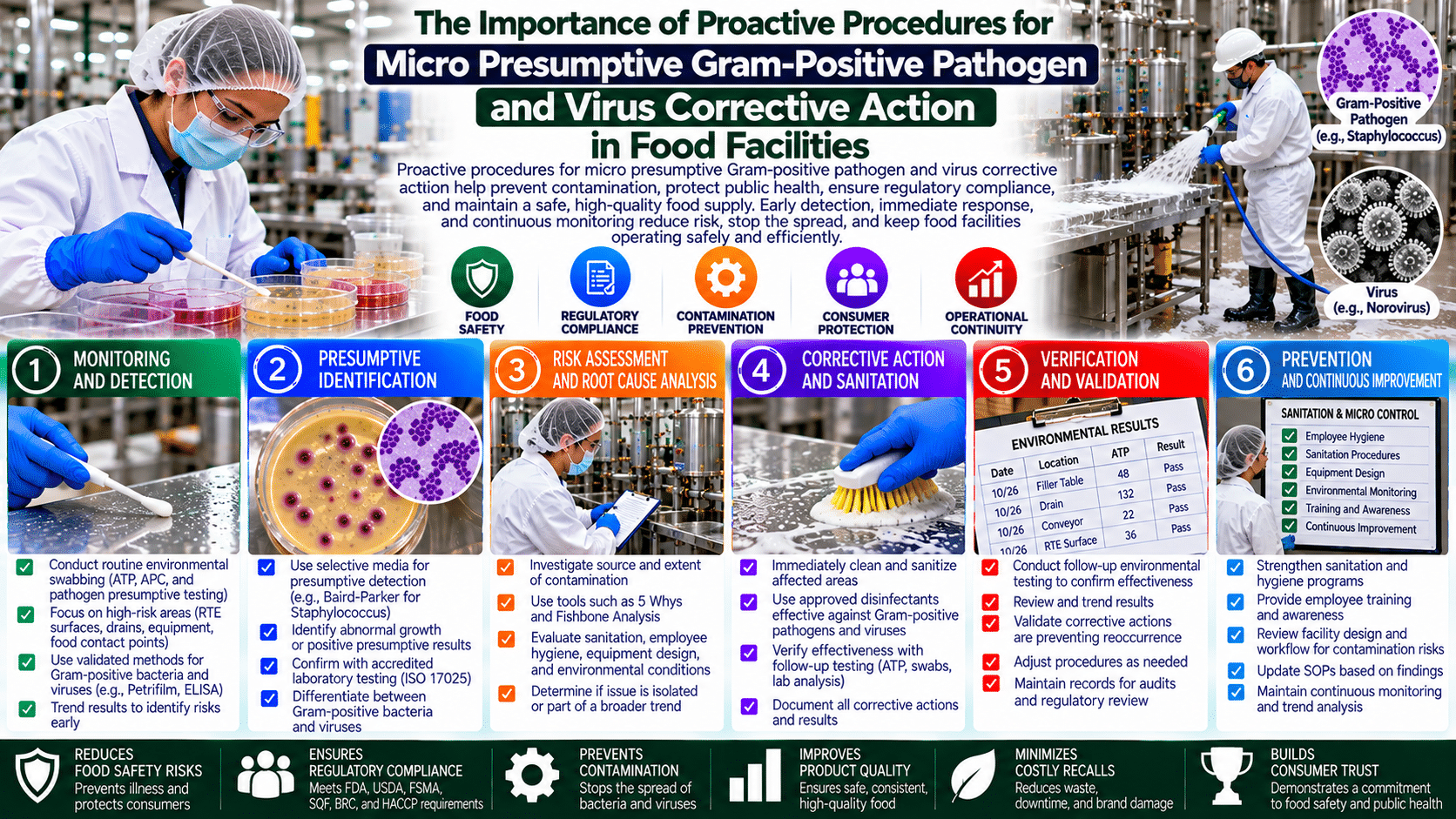
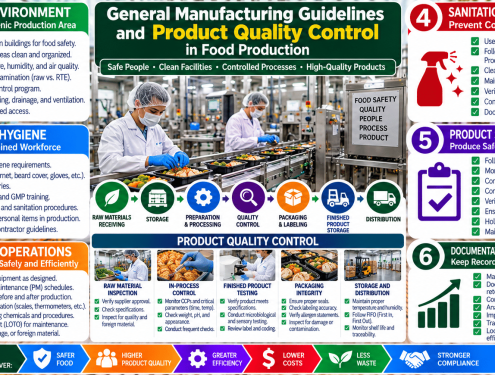
Food safety is one of the most scrutinized areas of regulatory compliance in the United States. Under the oversight of the U.S. Department of Agriculture’s Food Safety and Inspection Service (FSIS), facilities are required to operate under stringent Hazard Analysis and Critical Control Point (HACCP) systems, Sanitation Standard Operating Procedures (SSOPs), and microbiological monitoring programs. A crucial element of this oversight involves proactive preparedness for presumptive positive results of gram-positive pathogens and viruses within food processing environments.
Why Proactive Procedures Are Critical
Pathogens such as Listeria monocytogenes (a gram-positive bacterium) and viruses (e.g., Norovirus, Hepatitis A) represent significant threats to food safety and public health. If presumptive positive samples are identified in product-contact or non-product-contact surfaces, facilities must have immediate corrective actions in place. Without proactive measures, companies face the risk of regulatory enforcement, production stoppage, or even license suspension.
- FSIS Intensified Verification Testing (IVT):
Under 9 CFR Part 416.4 and 417.4, FSIS has authority to perform intensified environmental swabbing when sanitation deficiencies are suspected. If a facility lacks a corrective action game plan, intensified testing can quickly expose systemic sanitation failures.
- Corrective Actions under HACCP (9 CFR 417.3):
Facilities must take immediate corrective actions when a deviation or potential contamination occurs. This includes product segregation, intensified cleaning and sanitizing, reassessment of the HACCP plan, and root-cause analysis.
The Risks of Operating Without a Game Plan
Failure to establish proactive procedures leads to serious consequences:
- Unpreparedness During FSIS Swabbing:
Facilities without documented corrective actions can be caught off guard during intensified FSIS environmental sampling, which could result in regulatory noncompliance notices (NRs).
- License Suspension or Withdrawal:
Continued noncompliance or failure to demonstrate a robust sanitation program may lead to suspension of inspection services—effectively revoking the facility’s license to operate.
- Product Recalls and Public Health Alerts:
Positive results linked to inadequate controls can trigger costly recalls, loss of consumer trust, and potential litigation.
- Total Sanitation Program Overhaul:
A failed program may require complete revamping of sanitation procedures, retraining staff, updating SSOPs, and revalidating HACCP systems—costly both in downtime and resources.
Building a Robust Proactive Program
To avoid these pitfalls, food facilities should implement the following proactive strategies:
- Preemptive Environmental Monitoring: Develop a robust environmental monitoring program (EMP) with zone-based swabbing to detect contamination before FSIS intervention.
- Documented Corrective Action Protocols: Ensure clear step-by-step corrective action procedures are in place for presumptive positive results, including cleaning, sanitizing, verification testing, and documentation.
- Sanitation Validation and Verification: Regularly validate sanitation methods and chemicals against gram-positive pathogens and viruses, ensuring they meet efficacy standards.
- Employee Training: Train staff in rapid response protocols and emphasize the importance of immediate escalation in case of presumptive positives.
- Regulatory Alignment: Keep corrective action programs aligned with 9 CFR 416 (Sanitation), 417 (HACCP), and 430 (Post-lethality contamination controls).
Conclusion
In today’s regulatory environment, operating without proactive procedures for micro presumptive gram-positive pathogen and virus corrective action is not an option. FSIS intensified swabbing programs are designed to catch unprepared facilities off guard, and the consequences of noncompliance—ranging from license suspension to a full program overhaul—can devastate operations.
A proactive, robust sanitation and corrective action program, supported by comprehensive HACCP and SSOP documentation, not only ensures compliance with CFR mandates but also protects public health and secures the future of the facility. In food safety, preparation is not just prevention—it is survival.