Introduction: The Rise of Modern Entrepreneurship
Entrepreneurship is one of the most powerful forces shaping today’s global economy. It is the engine behind every small business, every startup, every innovation, and every transformative idea that creates progress in society. The world has shifted toward a new era where knowledge, creativity, digital tools, and accessibility have unlocked opportunities that once required massive capital, large corporations, or generational connections. Anyone—with the right system, mindset, and execution—can build a business from scratch and scale it into something meaningful.
Entrepreneurship today is no longer simply about owning a business; it is about building value. It is about identifying opportunities, solving problems, reducing complexity, and creating experiences that matter to customers. It is also about building processes, systems, and sustainable operations that allow a small business to grow beyond the limitations of the founder.
Small Business Management, on the other hand, is the discipline that turns entrepreneurial vision into long-term success. A business can be launched with passion and ideas, but it survives through structure, operations, cash flow management, marketing strategy, and the ability to adapt.
This article—Part 1 of your full-length 20,323-word publication—breaks down the foundations of entrepreneurship and small business success. It sets the stage for the advanced sections that will follow in Parts 2 through 10.
Chapter 1: What It Really Means to Be an Entrepreneur
Entrepreneurship is often romanticized as freedom, wealth, and independence — yet real entrepreneurship is defined by discipline, execution, and resilience long before success ever appears.
An entrepreneur:
- Identifies problems and turns them into opportunities
- Builds solutions that create value for others
- Accepts risk in exchange for long-term reward
- Innovates constantly
- Operates with clarity and adaptability
- Builds systems that allow the business to grow
Entrepreneurship is both creative and analytical. It requires vision, but also structure. It requires risk, but also calculated decision-making. It requires independence, but also collaboration and networking.
A successful entrepreneur learns to balance:
1. Vision vs. Execution
Ideas are plentiful, but execution determines success. Execution requires discipline, resource management, planning, and consistent action.
2. Risk vs. Stability
Entrepreneurs must embrace uncertainty but also create predictable systems that stabilize operations.
3. Creativity vs. Practicality
Creativity generates ideas. Practicality validates them through data, customer feedback, and market demand.
4. Passion vs. Profit
Passion ignites a business, but revenue sustains it. Entrepreneurs must align passion with markets willing to pay.
5. Growth vs. Control
Scaling requires delegating, outsourcing, automating, and trusting systems—not micromanaging.
The most important truth: Entrepreneurship is a learnable skill, not a personality trait. With the right processes, any dedicated individual can become a successful business owner.
Chapter 2: The Entrepreneurial Mindset
The mindset of an entrepreneur often determines the trajectory of the business more than the initial idea, resources, or market conditions. Many businesses fail not because they lack potential, but because the founder lacks the mindset required to withstand challenges and adapt.
Here are the core mental traits of successful entrepreneurs:
2.1 Resilience
Entrepreneurs face rejection, uncertainty, failure, and obstacles. Resilience allows them to recover quickly, adjust, and continue forward. It transforms setbacks into lessons rather than stopping points.
2.2 Adaptability
Markets change. Customer behavior evolves. Technology shifts. Economic conditions fluctuate. Adaptability allows entrepreneurs to pivot intelligently and keep the business relevant.
2.3 Self-Discipline
Without a boss, schedule, or external pressure, discipline becomes the founder’s greatest asset. This includes:
- Managing time
- Creating daily routines
- Setting goals
- Focusing on priorities
- Avoiding distractions
Discipline creates consistency — consistency creates momentum — momentum creates results.
2.4 Curiosity
Entrepreneurs must question assumptions, explore alternatives, conduct research, and understand customer needs deeply. Curiosity sparks innovation.
2.5 Problem-Solving
Every business exists to solve a problem. Entrepreneurs who master problem-solving can create products customers genuinely need rather than products the founder simply likes.
2.6 Long-Term Thinking
Successful entrepreneurs build foundations, not quick wins. They invest in:
- Systems
- Relationships
- Brand reputation
- Customer experience
- Quality
Long-term thinkers build businesses that endure beyond immediate trends.
Chapter 3: Identifying & Validating Business Ideas
A business is only as strong as the idea behind it — but idea selection must be based in reality, not emotion.
A great business idea has three qualities:
1. People want it (market demand).
2. People will pay for it (value).
3. You can deliver it (capability).
3.1 Sources of Great Business Ideas
Ideas come from many places:
A. Personal experience
You solve a problem you personally faced.
B. Industry experience
You understand inefficiencies and create a better way.
C. Customer complaints
Every complaint is a clue to a new business.
D. Market gaps
Look for products that are outdated, poorly designed, or overpriced.
E. Trends and emerging markets
AI, sustainability, digital commerce, health tech, automation, remote work, and creator economy trends create new opportunities.
3.2 Validating Your Idea
Before investing money or time, validate:
Step 1: Identify your target customer.
Who specifically will benefit?
Step 2: Conduct research.
Industry data, competitor analysis, surveys, interviews, and search trends.
Step 3: Create a minimum viable product (MVP).
Start with the simplest version of your product or service.
Step 4: Collect feedback.
Are customers satisfied? Confused? Do they want more?
Step 5: Test willingness to pay.
Validation is not compliments—it is revenue.
Chapter 4: Building a Business Plan That Actually Works
A business plan is not just a document; it is a strategic blueprint.
It shows where the business is going and how it will get there.
Your business plan should include:
1. Executive Summary
A clear, concise overview of the business, mission, vision, and value proposition.
2. Problem & Solution
The customer problem and how your business solves it.
3. Market Analysis
Target customers, industry conditions, and competitor comparison.
4. Business Model
How the business makes money: pricing, revenue streams, customer acquisition.
5. Operations Plan
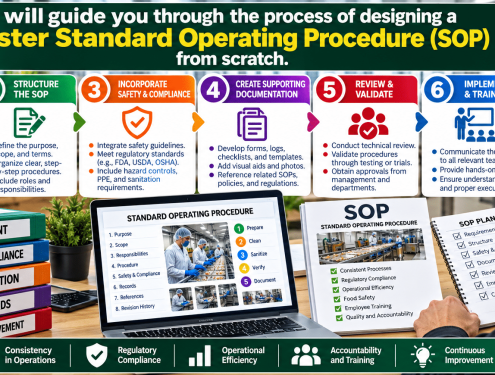
Workflows, SOPs, suppliers, production, delivery systems.
6. Marketing Strategy
Branding, SEO, social media, lead generation, advertising.
7. Financial Plan
Startup costs, cash flow, revenue forecasts, profit margins.
8. Risk Analysis
Identify potential risks and mitigation strategies.
A business without a plan is a business operating on luck.
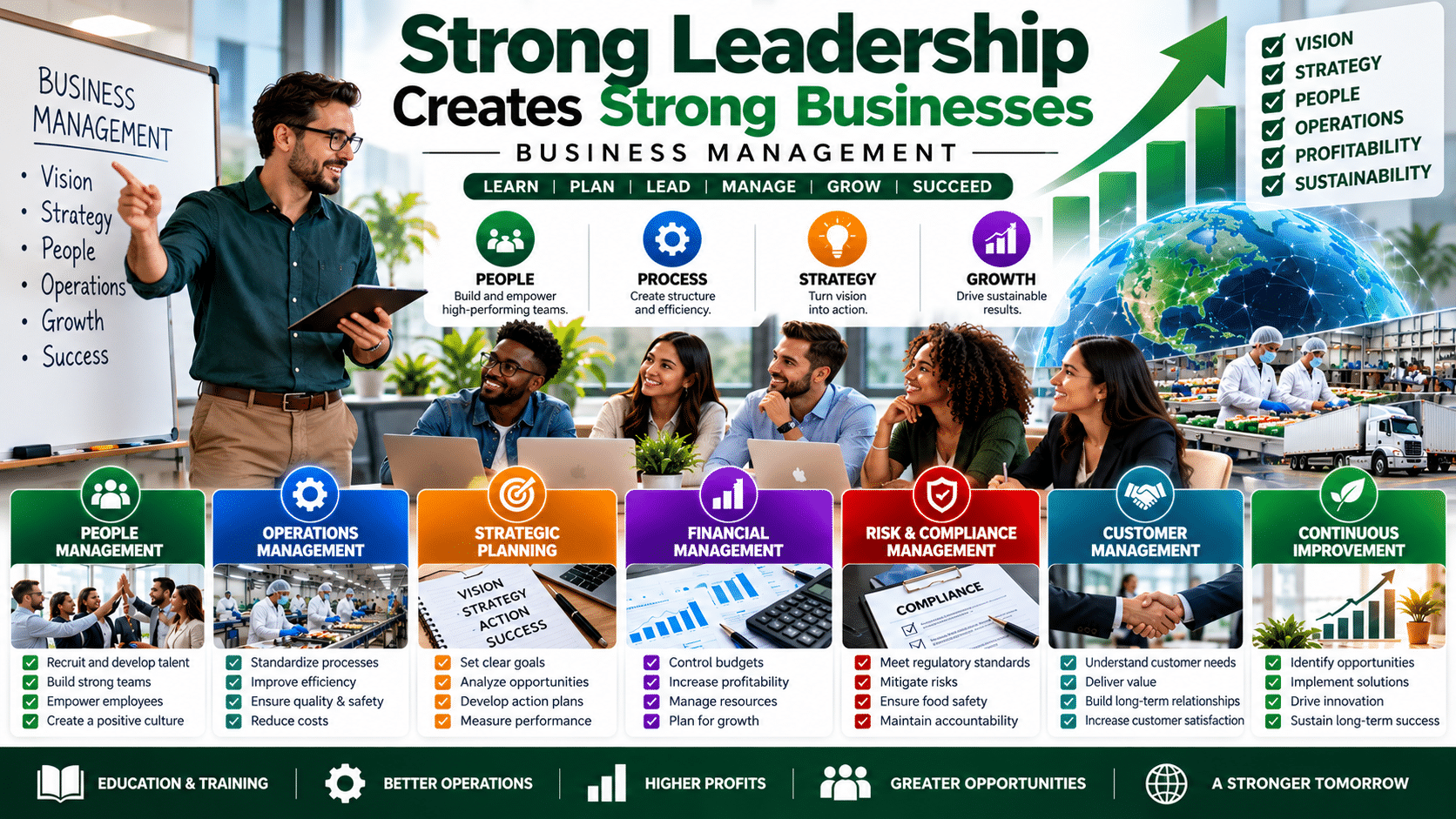
Chapter 5: Small Business Management Essentials
Once the business launches, the real work begins — managing the business for stability, growth, and scalability.
Small business management includes:
5.1 Operations Management
Smooth operations are the backbone of a successful business.
This includes:
- Daily workflows
- SOP documentation
- Inventory or resource management
- Quality control
- Scheduling
- Vendor relationships
- Productivity systems
The more optimized your operations, the faster and more predictably the business grows.
5.2 Financial Management
Cash flow is the oxygen of your business.
Entrepreneurs must manage:
- Budgeting
- Forecasting
- Bookkeeping
- Profit margins
- Debt and credit
- Tax obligations
- Pricing strategies
A business can be busy but still fail financially if margins are poor or cash flow is mismanaged.
5.3 Marketing Management
Small businesses survive through customer acquisition and retention.
A complete marketing strategy includes:
- Branding
- Content marketing
- Paid ads
- SEO
- Email marketing
- Social media
- Lead funnels
- Customer loyalty systems
Marketing is the fuel that drives revenue growth.
5.4 Leadership & Team Management
Entrepreneurs eventually transition from doing the work to managing people who do the work.
Leadership includes:
- Hiring
- Training
- Delegation
- Conflict resolution
- Motivation
- Accountability systems
- Team culture