Developing Effective SOPs for HACCP in Food Operations

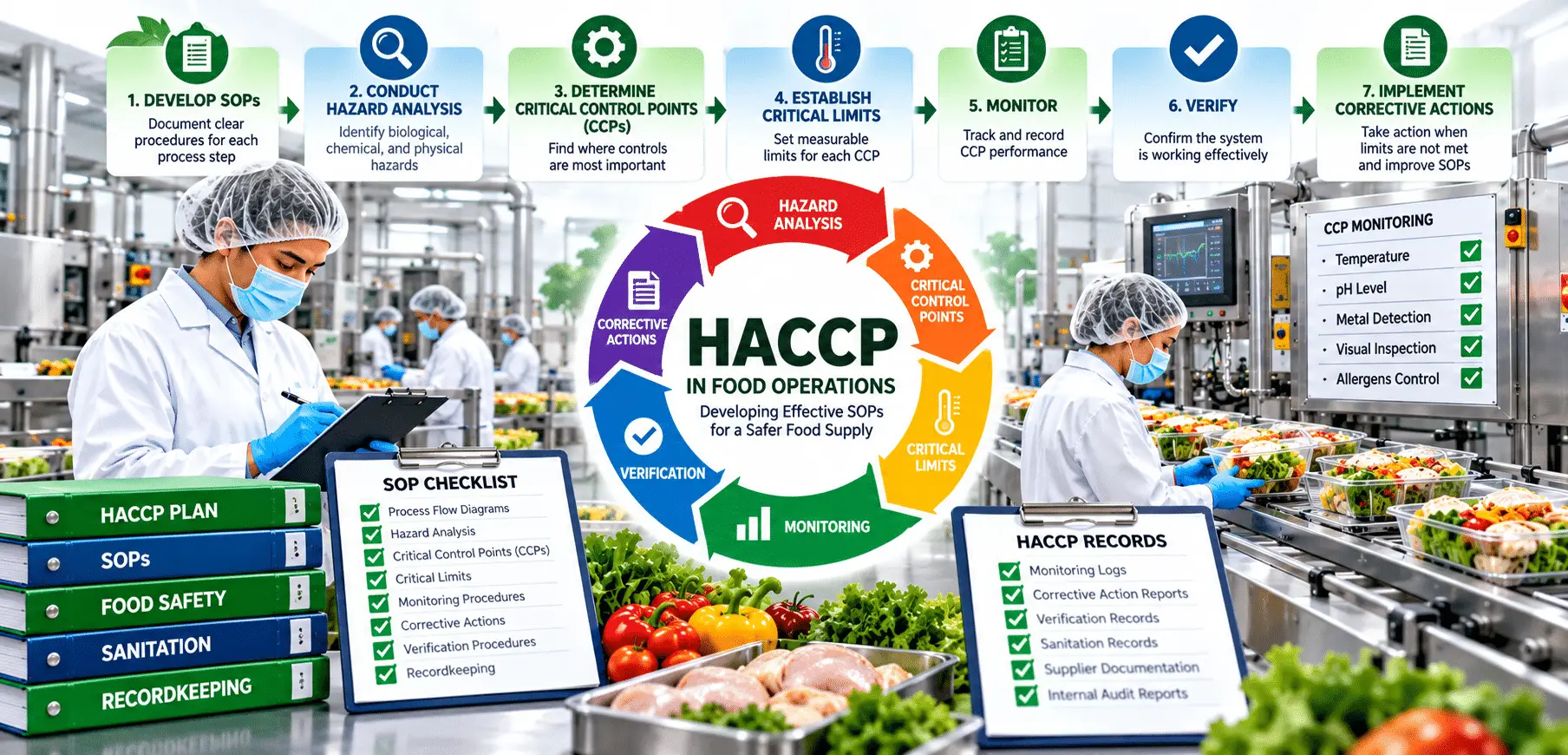

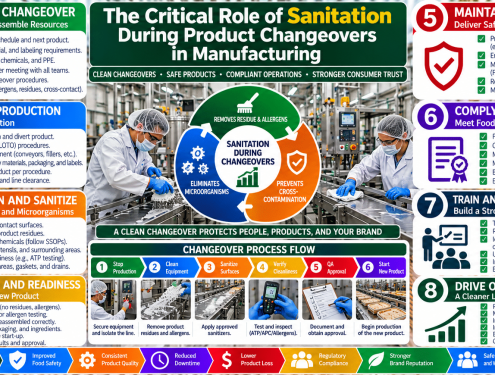
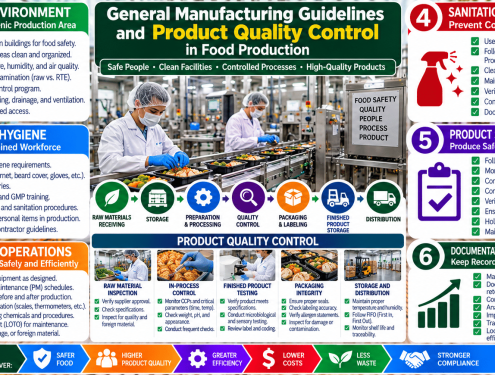
Hazard Analysis and Critical Control Points (HACCP) is a systematic approach to food safety that identifies, evaluates, and controls hazards throughout the food production process. Developing Standard Operating Procedures (SOPs) aligned with HACCP principles ensures consistent application of food safety controls, regulatory compliance, and protection of consumers from biological, chemical, and physical hazards.
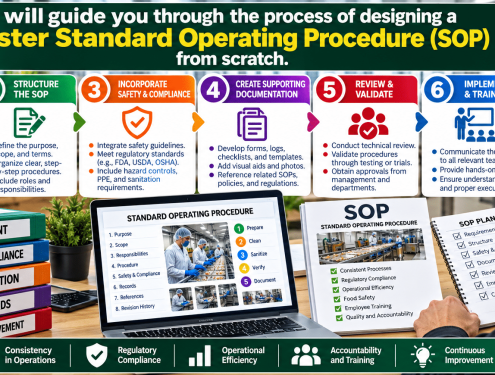
SOPs provide a documented framework for implementing HACCP plans, ensuring that every employee understands their responsibilities and follows standardized procedures. Benefits include:
Conduct a Hazard Analysis
Identify potential hazards in raw materials, processing steps, and finished products. Prioritize risks based on severity and likelihood.
Determine Critical Control Points (CCPs)
Identify points in the process where hazards can be prevented, eliminated, or reduced to acceptable levels.
Develop SOPs for Each CCP
Document monitoring procedures, critical limits, verification activities, and corrective actions.
Employee Training
Ensure all personnel understand the SOPs, the importance of each CCP, and how to record and report data accurately.
Monitoring and Continuous Improvement
Regularly review HACCP SOPs, verify CCP compliance, update procedures based on new risks, and integrate lessons learned from incidents or audits (WHO, 2021).
Recordkeeping
Maintain detailed logs of monitoring results, corrective actions, and verification activities to support traceability and regulatory compliance.
Read the full article
Key References:
FDA (2024) – Current Good Manufacturing Practice, Hazard Analysis, and Risk-Based Preventive Controls for Human Food
Outlines requirements for preventive controls and food safety practices, supporting HACCP implementation.
https://www.fda.gov
FSMA (2011) – Food Safety Modernization Act
Emphasizes preventive controls and modernized food safety measures in food production and distribution.
https://www.fda.gov/food/food-safety-modernization-act-fsma
CFR Title 21 (2024) – Food and Drugs Regulations
Governs legal requirements for sanitation, hygiene, labeling, and HACCP compliance in the United States.
https://www.ecfr.gov/current/title-21
ISO 22000:2018 – Food Safety Management Systems Requirements
Provides international guidance for managing food safety hazards and maintaining consistent operational quality.
https://www.iso.org/iso-22000-food-safety.html
ISO 9001:2015 – Quality Management Systems Requirements
Supports implementation of quality management principles to improve operational efficiency and product consistency.
https://www.iso.org/iso-9001-quality-management.html
WHO (2021) – Food Safety: Key Facts
Presents global insights into food safety risks and prevention strategies for foodborne illnesses.
https://www.who.int/news-room/fact-sheets/detail/food-safety
USDA (2023) – Sanitation Guidelines and Best Practices
Provides recommended hygiene procedures for food production and processing facilities.
https://www.fsis.usda.gov