The Importance of a Chemical Log in Food Manufacturing

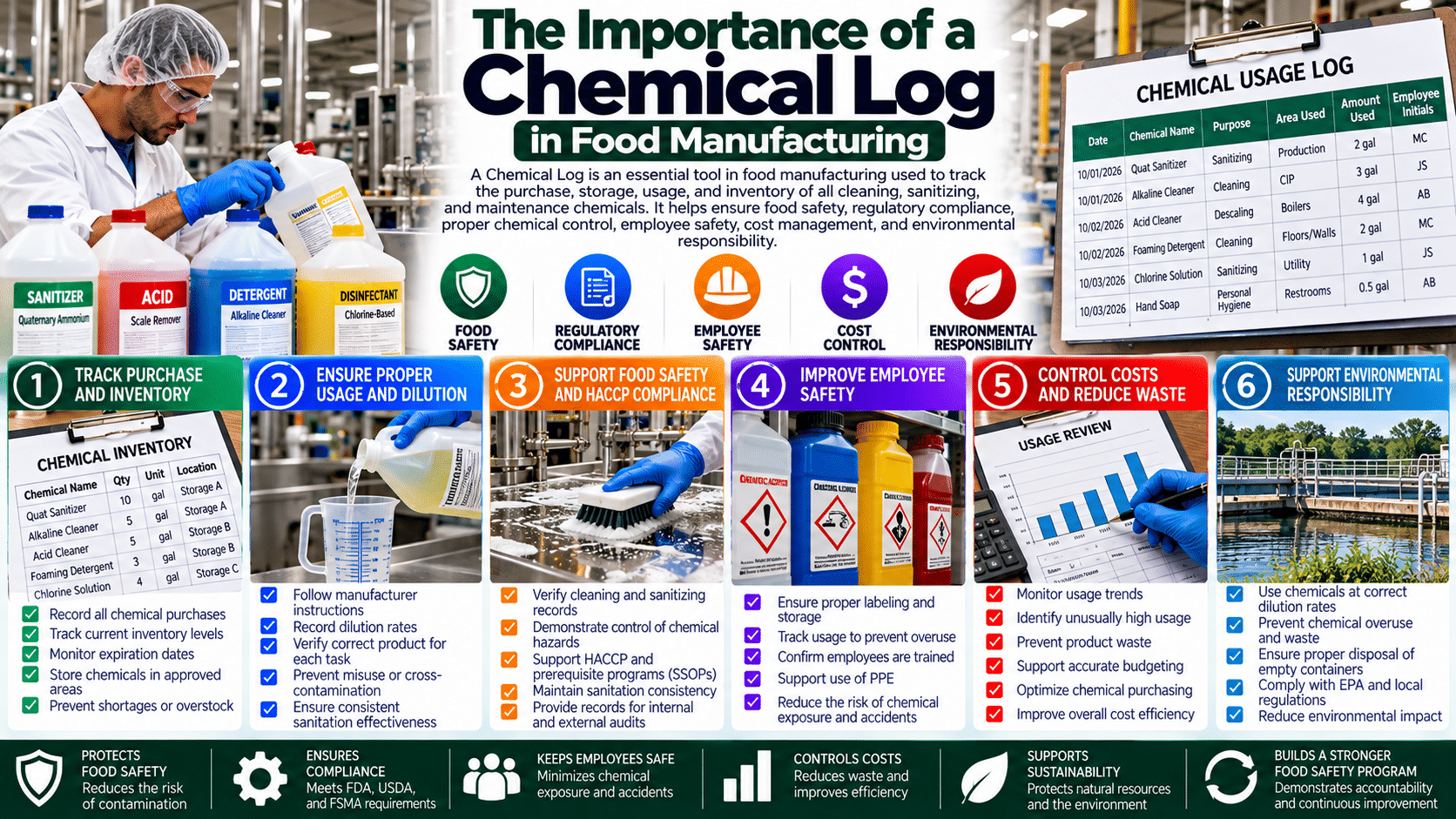

In food manufacturing facilities, sanitation is one of the most critical elements to ensure product safety, regulatory compliance, and consumer trust. Chemicals, such as detergents, sanitizers, and disinfectants, play an essential role in maintaining hygienic surfaces, preventing microbial contamination, and safeguarding the integrity of food products. However, the effectiveness of these chemicals is only as reliable as the system managing their use. This is where a Chemical Log becomes indispensable. A chemical log is a systematic record of the dispensing, handling, and storage of all chemicals within a facility, covering both food contact and non-food contact surfaces.
Understanding the Role of Chemicals in Food Safety
Sanitation chemicals are designed to remove soils, kill or reduce microorganisms, and maintain hygienic conditions on surfaces that come into contact with food and in the general environment. They can include:
Proper chemical use ensures that surfaces are hygienic, reducing the risk of contamination of food products with pathogens such as Salmonella, Listeria, and E. coli. For food contact surfaces, it is imperative that the chemicals used are approved for direct contact with food and are applied following manufacturer guidelines to avoid residues that could harm consumers.
The Function and Structure of a Chemical Log
A chemical log is more than a simple record; it is a compliance and operational tool that ensures accountability and traceability in the handling of sanitation chemicals. The log typically includes the following elements:
Maintaining this log allows a facility to demonstrate compliance with food safety standards, such as FSMA, SQF, or GFSI-certified programs, and provides a reference in the event of an audit or inspection.
Labeling and Control of Chemical Containers
An integral aspect of chemical management is the proper labeling and control of all chemical containers. Each container must clearly indicate its contents, including the chemical name and concentration. This prevents accidental misuse, cross-contamination, or chemical hazards. Labeling also ensures that any employee handling the chemical knows the purpose and safe usage instructions.
Chemical containers must be:
Without proper labeling and control, chemicals can become a liability rather than an asset, potentially introducing hazards into the food production environment.
The Role of Titration and Fact Sheets in Chemical Management
Titration is the process of measuring the exact concentration of active ingredients in sanitizers and disinfectants to ensure they are at the effective level recommended by the chemical provider. Regular titration checks confirm that chemicals are neither too weak, risking microbial survival, nor too strong, causing corrosion or unsafe residues.
Manufacturers of cleaning chemicals provide Fact Sheets or Letters of Guarantee detailing:
By comparing titration results against these fact sheets, facilities can validate that chemicals are being used correctly and in compliance with regulatory standards. This process is crucial for maintaining a scientifically based sanitation program and ensuring that all food contact surfaces meet hygiene requirements.
Food Contact vs. Non-Food Contact Surfaces
Not all surfaces in a food manufacturing facility require the same level of sanitation.
Maintaining separate chemical logs for these two types of surfaces, or clearly marking the target surfaces in a single log, helps facilities avoid misuse and maintain compliance.
Regulatory and Industry Compliance
Chemical management is not only an internal operational requirement but also a regulatory obligation. Compliance with FDA regulations, FSMA, CFR Title 21, and SQF standards demands that facilities document chemical usage and ensure proper sanitation of food contact surfaces. Auditors will look for:
A well-maintained chemical log supports these compliance requirements and demonstrates a facility’s commitment to food safety.
Benefits of Maintaining a Chemical Log
Best Practices for Chemical Logging and Sanitation
These practices help integrate chemical logging into a comprehensive food safety management system.
Conclusion
Chemical management is a cornerstone of food safety in manufacturing facilities. Proper use, dispensing, and logging of chemicals ensure that both food contact and non-food contact surfaces are hygienic and safe. A Chemical Log provides traceability, accountability, and compliance with regulatory and industry standards. Labeling of containers, titration verification, and adherence to chemical providers’ fact sheets or letters of guarantee are all essential components of a scientifically-based sanitation program.
By implementing a robust chemical logging system, facilities can protect consumers, maintain regulatory compliance, and demonstrate a commitment to quality and safety. Chemical logs are not simply paperwork—they are a strategic tool in safeguarding food products and supporting a culture of operational excellence.
References