The Importance of Maintaining a Clean Environment for Guests, Employees, and Management Through Microbial Control Procedures

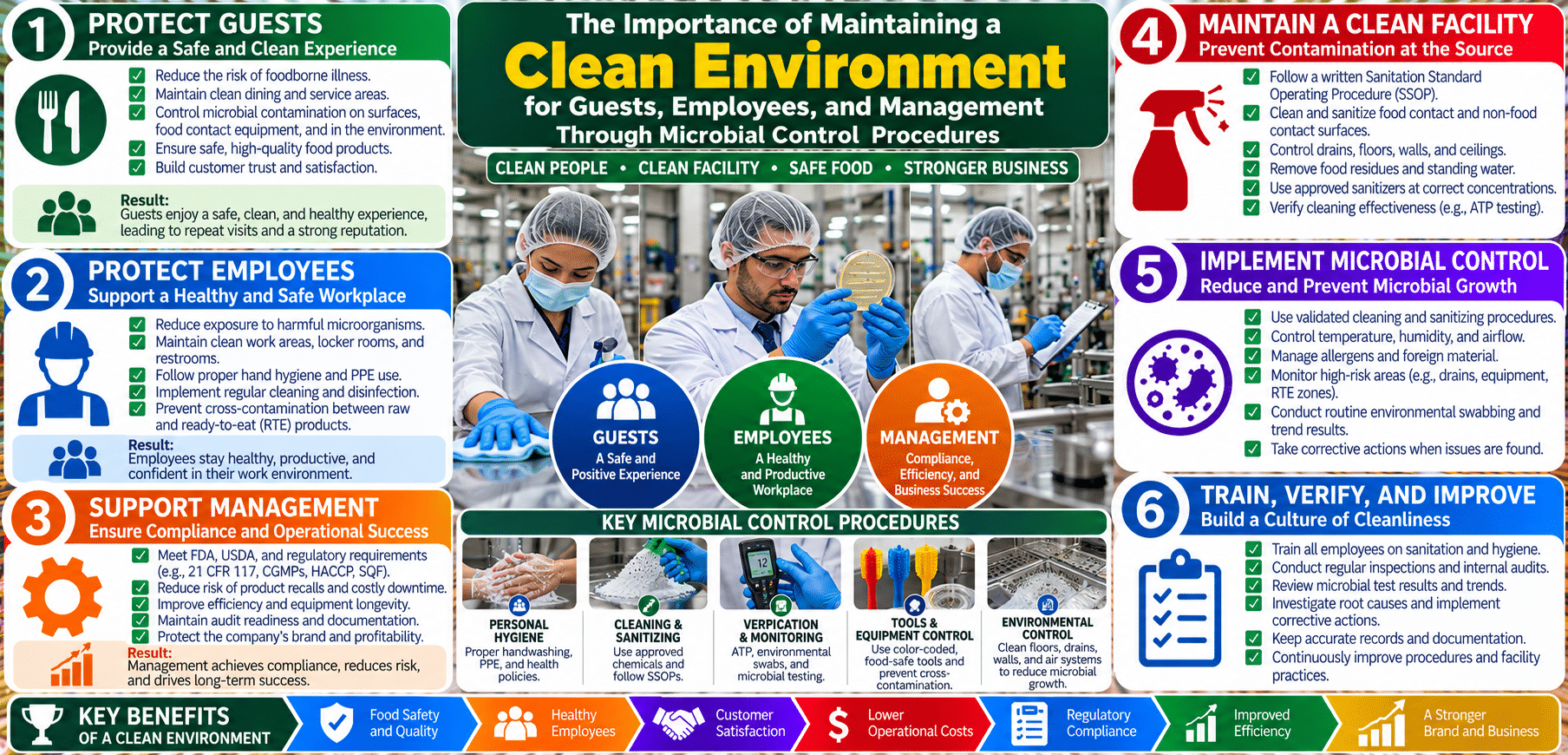

Maintaining a clean and safe environment is not just a matter of good housekeeping; it is a critical requirement for ensuring the safety and well-being of guests, employees, and management in any facility that handles food, beverages, or consumer goods. Microbial contamination poses one of the most significant risks in food production, hospitality, and workplace environments. When microorganisms such as bacteria, viruses, molds, and yeasts are not effectively controlled, they can compromise product integrity, endanger human health, and damage brand reputation.
This is why Microbial Control Procedures (MCPs) are essential. MCPs are structured systems of preventive practices, sanitation protocols, and verification methods designed to minimize the presence, growth, and spread of harmful microorganisms. By implementing these measures consistently, organizations create an environment that prioritizes safety, quality, and confidence for all stakeholders—guests, employees, and management alike.
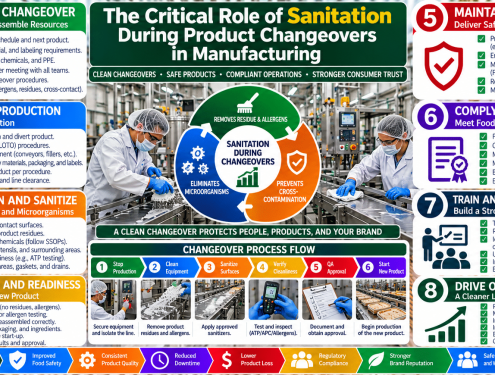
A structured sanitation schedule is the foundation of MCPs. All surfaces, equipment, and tools must be cleaned and sanitized regularly using approved chemicals at proper concentrations. Floors, drains, and high-touch areas must be given special attention, as they are common microbial harborage points.
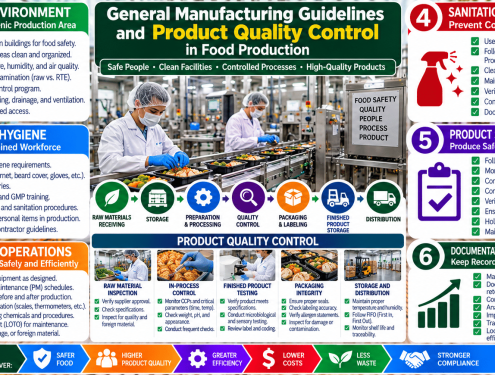
Employees and management must follow GMPs as outlined in 21 CFR Part 117 (Current Good Manufacturing Practices for Human Food). These practices include proper handwashing, wearing protective clothing, restricting jewelry, and preventing cross-contamination by maintaining hygienic zoning between raw and finished product areas.
Guests and contractors entering production or sensitive areas must adhere to facility hygiene standards. This includes donning hairnets, shoe covers, and protective clothing to minimize the risk of introducing outside contaminants. Sign-in procedures and safety briefings further ensure compliance.
Routine environmental swabbing and microbial testing help detect potential contamination sources before they become critical. Programs should align with USDA-FSIS Sanitation Standard Operating Procedures (SSOPs) and FDA environmental monitoring guidelines. Results should be documented, trended, and reviewed by Quality Assurance (QA) to identify patterns.
Water is a critical vector for microbial contamination if not monitored. Facilities must routinely test incoming and process water to ensure compliance with microbiological standards. Air filtration systems, including HEPA filters in sensitive zones, help control airborne contaminants.
No microbial control program is effective without thorough and ongoing training. Employees, managers, and even visitors must be educated on sanitation expectations, microbial hazards, and reporting responsibilities. Training should be documented and refreshed annually to comply with regulatory standards.
Microbial Control Procedures align directly with federal laws and regulatory guidance:
These standards provide the legal and scientific basis for MCPs, ensuring that organizations not only protect public health but also comply with mandatory requirements.
Microbial control is not optional—it is essential for maintaining a safe, efficient, and compliant environment. Guests must feel confident that the facilities they visit are sanitary, employees deserve a safe and hygienic workplace, and management must ensure compliance with federal regulations while protecting the company’s reputation.
By adopting comprehensive Microbial Control Procedures, including facility sanitation programs, environmental monitoring, GMP adherence, and robust training, organizations can significantly reduce contamination risks. Ultimately, the responsibility to maintain a clean environment rests with everyone on site, creating a culture of accountability and safety that benefits all.