Turning Data Into Action: The Strategic Power of Trend Analysis


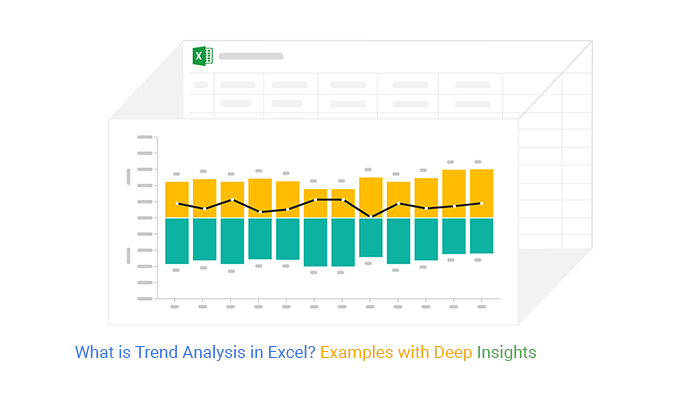
In today’s data-driven world, organizations face unprecedented amounts of information. Every transaction, website click, and social media interaction produces data, but raw data alone is not actionable. To make informed decisions, businesses, investors, marketers, and project managers must identify patterns and anticipate future outcomes. This is where trend analysis becomes indispensable. Trend analysis is a statistical method used to examine historical data over time to identify patterns, shifts, and trends. By understanding these trends, organizations can forecast future events, optimize strategies, and mitigate risks.
Trend analysis is not limited to one industry. It is applied in finance to monitor stock prices, in marketing to understand consumer behavior, in healthcare to track disease outbreaks, and in technology to anticipate adoption of new innovations. Across all these applications, trend analysis transforms historical data into actionable insights, enabling organizations to make strategic decisions with confidence.
At its core, trend analysis involves collecting, organizing, and evaluating historical data to identify recurring patterns or changes over time. The objective is to detect whether metrics show an upward, downward, or stable movement. Businesses use trend analysis to make forecasts, economists use it to anticipate market shifts, and marketers leverage it to understand customer behavior.
Trend analysis can be applied to a variety of data types, including financial indicators, sales numbers, website traffic, healthcare metrics, and operational KPIs. By systematically studying these data points, organizations gain insight into what has happened and, more importantly, what is likely to happen in the future.
Trend analysis provides organizations with a foundation for data-driven decision-making. The key benefits include:
Trend analysis allows organizations to predict future events by examining historical data. For instance, a retail company can analyze seasonal sales data to forecast demand for the next quarter. Similarly, investors can study stock market trends to anticipate price movements and manage their portfolios strategically.
Organizations face complex decisions every day. Trend analysis equips decision-makers with actionable insights, enabling them to choose strategies backed by evidence rather than intuition. For example, marketing teams can use trend data to determine which campaigns are likely to yield the highest ROI.
Trend analysis provides an ongoing assessment of business performance. By comparing current metrics with historical trends, managers can determine whether strategies are effective or require adjustment.
Identifying potential risks early is a critical advantage of trend analysis. Organizations can detect deviations from expected trends and take corrective action before minor issues escalate into major problems.
Trend analysis deepens organizations’ understanding of market dynamics and consumer behavior. By studying long-term trends, businesses can adapt to shifting customer preferences and maintain a competitive edge.
Trend analysis is versatile and benefits multiple roles across industries:
By leveraging trend analysis, these professionals gain the insights necessary to make strategic, proactive decisions.
Financial institutions, investors, and analysts rely heavily on trend analysis to track stock market performance, monitor interest rates, and evaluate economic indicators. Trend analysis enables investors to identify profitable opportunities while mitigating risks associated with market volatility.
Marketers track trends to understand customer preferences, campaign performance, and product demand. By analyzing trends over time, businesses can optimize pricing strategies, improve product offerings, and increase customer engagement.
Healthcare professionals use trend analysis to monitor disease outbreaks, patient outcomes, and the effectiveness of medical treatments. Early detection of negative trends, such as rising infection rates, allows for timely interventions and improved public health outcomes.
Retailers analyze sales trends, inventory levels, and seasonal demand to optimize supply chain management. By predicting product demand, businesses reduce stockouts, minimize excess inventory, and enhance profitability.
In the fast-paced technology sector, trend analysis helps organizations monitor adoption rates, emerging innovations, and market shifts. Companies can use this information to prioritize product development and stay ahead of competitors.
Trend analysis should be integrated into organizational decision-making processes. Common scenarios include:
The process of trend analysis involves several structured steps:
The first step is gathering relevant historical data. This data should be accurate, complete, and representative of the metric being analyzed. Sources may include internal records, financial statements, sales data, market reports, or government statistics.
Data must be accurate and free from errors, duplicates, or inconsistencies. Cleaning ensures the reliability of analysis and prevents misleading conclusions.
Graphs, charts, and time series plots make trends easier to identify. Visualization enables analysts to detect patterns that may not be evident in raw numerical data.
Analysts apply methods such as regression analysis, moving averages, or seasonal adjustments to quantify trends. This step provides a numerical basis for interpreting patterns and predicting future outcomes.
Finally, analysts interpret the results and provide actionable insights. The goal is to translate observed trends into practical recommendations for decision-makers.
Trend analysis helps identify different types of trends:
Recognizing these trends allows organizations to respond appropriately, whether that means scaling up operations, addressing declining performance, or maintaining stability.
Trend analysis provides organizations with numerous advantages:
Despite its advantages, trend analysis is not without challenges:
To overcome these challenges, organizations should invest in robust data collection methods, analytical tools, and skilled personnel.
Modern trend analysis often relies on a combination of statistical and software tools:
Trend analysis is a critical tool for transforming historical data into actionable insights. By identifying patterns and interpreting shifts in key metrics, organizations can forecast future developments, make informed decisions, and respond proactively to challenges and opportunities.
Across finance, marketing, healthcare, retail, and technology, trend analysis enables businesses, investors, and policymakers to understand market dynamics, optimize performance, and achieve sustainable growth. Organizations that master trend analysis gain a competitive advantage by anticipating change, mitigating risks, and making strategic decisions with confidence.
In today’s data-driven environment, trend analysis is not just an analytical tool—it is a strategic imperative. Organizations that leverage trend analysis effectively are better positioned to navigate uncertainty, innovate, and achieve long-term success.
Berman, K., & Knight, J. (2021). Financial Analysis: Tools & Techniques. Pearson Education.
Investopedia. “Trend Analysis Definition.” https://www.investopedia.com/terms/t/trend-analysis.asp
WallStreetMojo. “Trend Analysis in Financial Markets.” https://www.wallstreetmojo.com/trend-analysis/
MoreSteam. “Trend Analysis Tools for Lean Six Sigma.” https://www.moresteam.com/toolbox/trend-analysis.cfm
ChartExpo. “Understanding Trends in Data Visualization.” https://chartexpo.com/blog/trend-analysis