The Importance of Establishing Corrective Actions for Microbiological Presumptives in Food Safety

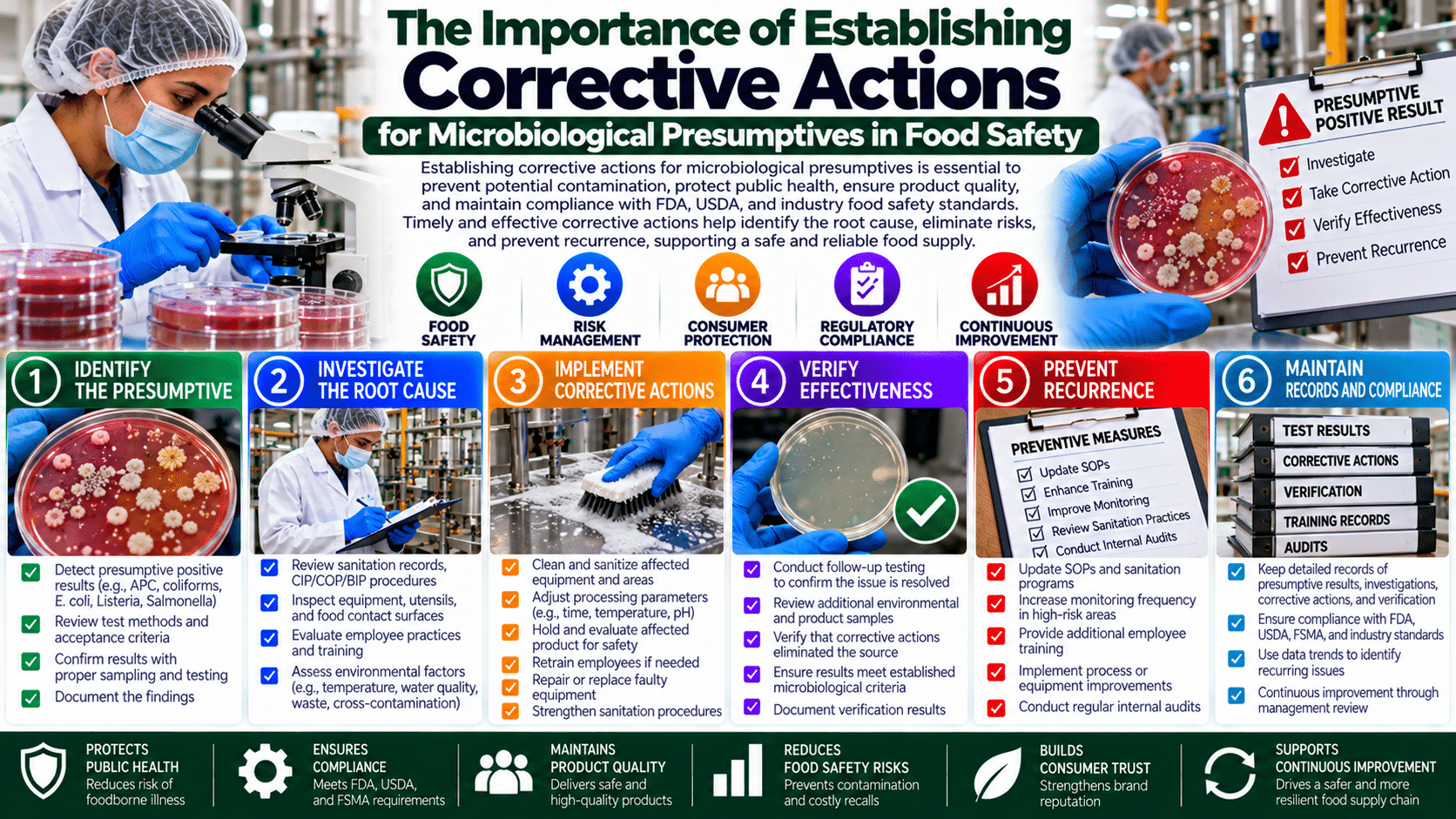

Microbiological safety is the foundation of any robust food safety program. Within food manufacturing and processing environments, presumptive microbiological findings—commonly called micro-presumptives—play a vital role in identifying early contamination risks. A presumptive positive occurs when an initial microbiological test suggests the potential presence of pathogenic or spoilage microorganisms, such as Gram-positive bacteria (e.g., Listeria monocytogenes, Staphylococcus aureus, or Bacillus cereus), pending confirmatory testing (ICMSF, 2011). Establishing corrective actions in response to these findings is not only a regulatory expectation but also a critical measure for protecting public health, maintaining operational licenses, and preserving consumer trust.
A presumptive result indicates that a microorganism of concern has been detected through rapid or culture-based testing but has not yet been fully confirmed by reference methods. For example, Gram-positive presumptives often trigger immediate concern due to their strong association with foodborne illness and product spoilage (FDA BAM, 2023).
Even before confirmation, presumptive findings require swift corrective action, since waiting for final confirmation may increase the risk of contaminated product entering commerce (USDA-FSIS, 9 CFR Part 430).
Corrective actions are structured responses designed to eliminate the root cause of contamination and prevent recurrence. According to 21 CFR 117.150 (Food Safety Modernization Act – Preventive Controls Rule), facilities must establish and implement corrective action procedures whenever verification activities (such as testing) indicate a problem.
Corrective actions for micro-presumptives include:
Failure to implement corrective actions may result in regulatory penalties, including product recalls, warning letters, and even suspension or revocation of operating licenses (FDA, 21 CFR 7; USDA-FSIS 9 CFR 500).
Food safety audits and environmental monitoring programs classify equipment and facility areas into zones that reflect the risk of product contamination:
Presumptive positives in Zone 1 or Zone 2 are especially critical. Findings in these areas may lead to immediate enforcement actions by regulatory authorities because they directly compromise food safety (FDA Guidance for Industry, 2017; BRCGS Food Safety Standard, Issue 9).
Effective corrective action depends on strong collaboration between Quality Assurance (QA), Quality Control (QC), and Sanitation teams. QA/QC teams analyze laboratory results, trace contamination vectors, and determine likely harborage areas. These findings are then communicated to the sanitation department, which implements targeted cleaning and disinfection protocols. This closed-loop system ensures that contamination is not only removed but also prevented from recurring.
Studies have shown that integrating environmental monitoring data into sanitation programs improves long-term microbial control and reduces presumptive positives in high-risk zones (Gandhi & Chikindas, 2007; ISO 18593:2018).
Maintaining a microbiologically safe environment is essential for consumer protection. Pathogens such as Listeria monocytogenes and Salmonella spp. can cause severe illness, especially in vulnerable populations. Regulators such as FDA, USDA-FSIS, and global certification bodies (SQF, BRC, AIB) expect proactive management of presumptive findings.
If corrective actions are not properly established and implemented, consequences may include:
Microbiological presumptives are not mere laboratory artifacts—they are early warning signals of potential hazards in food production. Establishing robust corrective actions ensures regulatory compliance, protects operational licenses, and most importantly, safeguards public health. By integrating QA, QC, and sanitation findings, companies can build resilient food safety systems that minimize risk and build consumer trust.