The Importance of a Policy for Commissioning New Equipment and the Role of Maintenance in Food Manufacturing

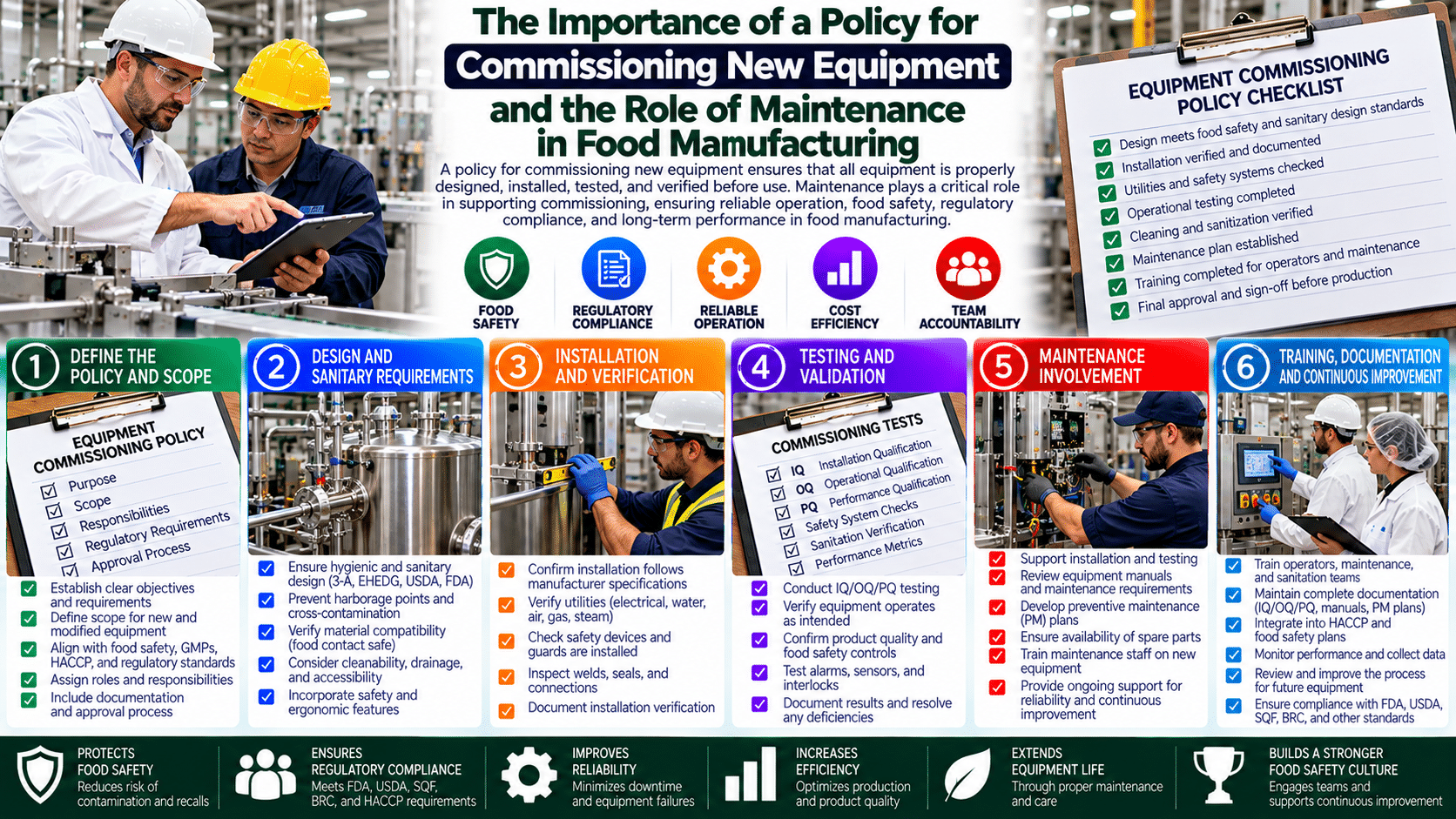

In the food manufacturing industry, the commissioning of new equipment is a critical process that ensures the safety, quality, and efficiency of production operations. A well-defined policy for commissioning new, used, or modified equipment is essential to meet regulatory requirements and maintain high standards of food safety and quality. This policy outlines the procedures and responsibilities involved in the commissioning process, with a particular focus on the role of maintenance personnel.
Understanding Equipment Commissioning in Food Manufacturing
Equipment commissioning refers to the process of verifying that new, used, or modified equipment meets the necessary specifications and is ready for operational use. This process involves several key steps:
A structured commissioning process helps identify potential issues early, reduces the risk of equipment failure, and ensures that the equipment operates as intended throughout its lifecycle.
Regulatory Frameworks Guiding Equipment Commissioning
Several regulatory standards provide guidelines for equipment commissioning in the food manufacturing industry:
These standards highlight the importance of a systematic approach to equipment commissioning to ensure compliance with food safety regulations and industry best practices.
The Role of Maintenance in Equipment Commissioning
Maintenance personnel play a crucial role in the equipment commissioning process. Their responsibilities include:
By actively participating in the commissioning process, maintenance personnel help ensure that equipment is safe, reliable, and compliant with food safety standards.
Developing Standard Operating Procedures (SOPs) for Equipment Commissioning
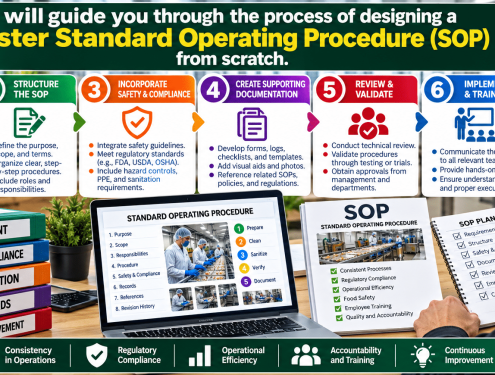
Standard Operating Procedures (SOPs) are essential for guiding the commissioning process and ensuring consistency and compliance. SOPs should include:
Developing comprehensive SOPs helps standardize the commissioning process, reduces the risk of errors, and ensures that all equipment meets the necessary safety and quality standards.
Verification and Validation During Commissioning
Verification and validation are critical components of the commissioning process:
Both verification and validation help identify potential issues early in the commissioning process, allowing for corrective actions before the equipment is put into production.
Managing Non-Conforming Equipment
Even with thorough commissioning procedures, equipment may occasionally fail to meet specifications or performance standards. In such cases:
Effectively managing non-conforming equipment helps maintain product safety and quality and ensures compliance with regulatory requirements.
Training and Competency of Maintenance Personnel
The effectiveness of the commissioning process depends on the training and competency of maintenance personnel. Training should cover:
Regular training ensures that maintenance personnel are equipped with the knowledge and skills necessary to perform their roles effectively and in compliance with regulatory standards.
Conclusion
Implementing a comprehensive policy for commissioning new, used, or modified equipment is essential for ensuring the safety, quality, and efficiency of food manufacturing operations. Maintenance personnel play a vital role in this process by conducting inspections, performing tests, validating cleaning procedures, and maintaining detailed records. By adhering to regulatory standards and developing standardized procedures, organizations can ensure that their equipment meets the necessary specifications and operates effectively, thereby safeguarding product quality and consumer safety.
For further information on equipment commissioning in the food manufacturing industry, consider consulting the following resources:
These resources provide valuable insights and guidelines to help organizations develop and implement effective equipment commissioning policies and procedures.